What it is
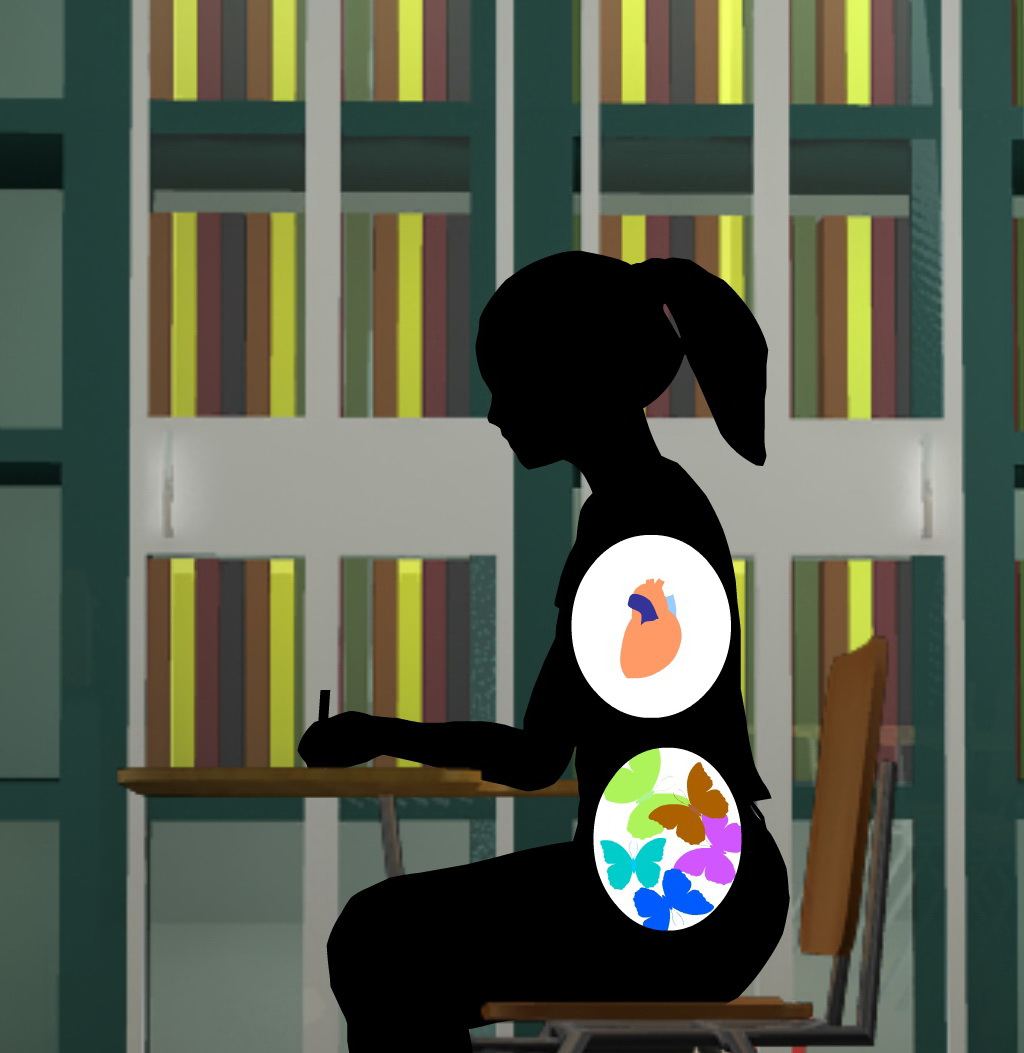
Generalized anxiety disorder (GAD), previously called Overanxious Disorder, is characterized by chronic, excessive worry about events or activities, such as everyday events, health, family, school performance, or world affairs. Children with GAD are described as “worrywarts.” They have been worried more days than not for at least six months. They have difficulty controlling their worry and are often consumed by worry. When they worry, they experience at least one of the following physical symptoms: restlessness, fatigue, difficulty concentrating, irritability, muscle tension, and/or difficulty sleeping. Some children with GAD also experience gastrointestinal discomfort.
Some children with GAD may exhibit a certain theme to their worry. For example, some children with GAD are very perfectionistic. They might worry excessively about being on time. They adhere to high standards for themselves in academic and performance domains and worry greatly about not meeting those standards. They fear making mistakes and may spend an excessive amount of time working on projects. Other children with GAD may worry excessively about safety concerns, such as war, crime, and natural disasters. These children may become overly distressed by stories they hear on the news and perseverate on “what if” scenarios. Other children with GAD may exhibit a “flavor of the day” worry. They often worry but the focus of the worry may shift depending on what they hear or experience in a given day. As a coping mechanism, many children with GAD frequently seek approval or reassurance from others. However, this usually does not satisfy them, resulting in continual reassurance-seeking.
GAD occurs in approximately 3-6% of children. Typical onset occurs between the ages of 10 and 14. It is generally equally common among boys and girls, with a somewhat higher prevalence in adolescent females as compared to adolescent males. Of note, it is normal for children and adolescents to have some anxiety about things like everyday events, family and school; however, children with GAD worry about these kinds of things to such a degree that the worry causes significant impairment in their ability to function at home or at school.
Avoiding, checking, and seeking reassurance bring quick relief, but they keep worry going:
Symptoms
Kids with generalized anxiety disorder (GAD) show consistent, excessive and unrealistic worry about everyday things like school, health, family, friends, or their performance on various tasks. This worrying goes on every day, possibly all day. It disrupts social activities and interferes with school, family, and free time.
Physical symptoms of GAD include the following:
- muscle tension
- fatigue
- restlessness
- difficulty sleeping
- irritability
- abdominal discomfort or diarrhea
Red flags to watch for
Here are some red flags that your child may be struggling with Generalized Anxiety Disorder:
- Expects bad things to happen
- Excessive worry about upsetting others
- Asks questions (or asks for reassurance) too frequently
- Perfectionism
- Excessive worry about failure
- Wiggles, is jittery, shaky, high strung, tense and unable to relax
- Frequent stomachaches/lateness/missed days
How it is treated
In the Coping Cat Program, treatment for children with GAD has two parts. First, children work with therapists to gain a better understanding of their anxiety. Children learn to identify bodily arousal associated with anxiety as well as their anxious thoughts and worries. Children also learn relaxation techniques and problem-solving strategies that can be helpful in managing their worry.
The second part of treatment involves gradually exposing children with GAD to the kinds of situations that they fear and avoid. Because children with GAD worry about a wide array of things, exposures allow therapists to focus on the concerns that are most interfering for each child. For example, a child who worries excessively about performing well might participate in an exposure in which s/he fails. If failing is a high-anxiety situation, the therapist might start by having the child do an imaginal exposure. The child would think aloud about an anxiety-provoking situation, for example failing a test. Then the child would imagine each step of failing the test, from entering the testing classroom to receiving the bad grade. Once anxiety is at a manageable level during imaginal exposures, the child is ready to advance to more real-world exposures. For example, the therapist might create an impossibly difficult test for the child to take. The child would not only take the test during the session but also receive a poor grade on it, allowing him or her to experience test failure in real life.
Such real-world exposures are not possible for all worries children with GAD have. For example, some children with GAD worry about the safety of themselves and others. An exposure for this kind of worry might involve a child reading or listening to an imaginary script about his or her worst fear, like a parent dying or the world ending. The child would read or listen to this script repeatedly under the care of a therapist until his or her anxiety is reduced by half. While these kinds of exposures should be introduced during the therapy session, the child can then practice them at home.
Other children with GAD worry excessively about lots of little things. Therapists might work with their clients to create a “worry box”. Children then write their worries on a slip of paper to place in the box. They are allowed to look at them once a day for a specified amount of time. Because children with GAD fear many situations that frequently change over time, treatment can be difficult; however, GAD can often be treated successfully. For more information on GAD and treatments for GAD, please see the below references.
Free tools



Finding help
Get treatment with our team
The OCD & Anxiety Institute, founded by Dr. Muniya Khanna, offers evaluation and CBT with exposure for kids, teens, and young adults with anxiety and OCD, in person in Berwyn, PA and by video across Pennsylvania.
Find a provider
Looking for care in person or outside of Pennsylvania? Start with a directory below.
 Referral NetworkCoping Cat trained clinicians worldwideSearch by location or specialtyFind a clinician →
If you are unable to find a treatment provider through these or other websites, you can:
- Contact the psychiatry department at a local medical school or a university psychology department.
- Contact your county mental health department, a local hospital, or a community mental health center and ask about mental health clinics or staff psychiatrists.
- Search through your insurance company for local behavioral health or psychiatry providers.
- Search the American Psychological Association provider database.
Disclaimer: We do not endorse the references or providers listed. We list available resources as a service.
Books
Books for kids
A reading list for children and teens, organized by age.
Reading level 4 to 8 10 books
- First Day Jittersby Julie Danneberg. Whispering Coyote Press, 2000.
- Wemberly Worriedby Kevin Henkes. Greenwillow Books, 2010.
- Scary Night Visitors: A Story for Children with Bedtime Fearsby Irene Wineman Marcus, Paul Marcus, & Susan Jesche. Magination Press, 1990.
- I Don’t Know Why…I Guess I’m Shy: A Story About Taming Imaginary Fearsby Barbara Cain & J. J. Smith-Moore. Magination Press, 2000.
- Into the Great Forest: A Story for Children Away from Parents for the First Timeby Irene Wineman Marcus. Magination Press, 1992.
- Night Light: A Story for Children Afraid of the Darkby Jack Dutro & Kenneth Boyle. Magination Press, 1991.
- Cat’s Got Your Tongue? A Story for Children Afraid to Speakby Charles E. Schaefer & Judith Friedman. Magination Press, 1992.
- Outsmart Your Worry Tool Kit for Kids, Ages 5-11by Tool Kits for Kids, LLC, 2008.
- Lions Aren’t Scared of Shots: A Story for Children About Visiting the Doctorby Howard J. Bennett. Magination Press, 2007.
- Sometimes I’m Scaredby Jane Annunziata & Marc Nemiroff. Magination Press, 2009.
Reading level 9 to 12 8 books
- Nobody’s Perfect: A Story for Children about Perfectionismby Ellen Flanagan Burns. Magination Press, 2009.
- What to Do When You Worry Too Much: A Kid’s Guide to Overcoming Anxietyby Dawn Huebner. Magination Press, 2006.
- What to Do When Your Brain Gets Stuck: A Kid’s Guide to Overcoming OCDby Dawn Huebner. Magination Press, 2007.
- Up and Down the Worry Hill: A Children’s Book about Obsessive-Compulsive Disorder and its Treatmentby Aureen Pinto Wagner & Paul A. Jutton. Lighthouse Press, Inc., 2004.
- I Bet I Won’t Fret: A Workbook to Help Children With Generalized Anxiety Disorderby T.A. Sisemore. New Harbinger, 2008.
- Outsmart Your Worry Tool Kit for Kids, Ages 11-18by Tool Kits for Kids, LLC, 2009.
- Kissing Doorknobsby Terry Spencer Hesser. Laurel Leaf, 1999.
- Blink, Blink, Clop, Clop: Why We Do Things We Can’t Stopby E. Katia Moritz. Weston Press, 2011.
For teens 5 books
- My Anxious Mind: A Teen’s Guide to Managing Anxiety and Panicby Michael A. Tompkins, Katherine A. Martinez, & Michael Sloan. Magination Press, 2009.
- Outsmart Your Worry Tool Kit for Kids, Ages 11-18by Tool Kits for Kids, LLC, 2009.
- Free From OCD: A Workbook for Teens With Obsessive Compulsive Disorderby T.A. Sisemore, 2010.
- Perfectionism: What’s Bad About Being Too Goodby Miram Adderholdt & Jan Goldberg. Free Spirit Publishing, 1999.
- Talking Back to OCD: The Program That Helps Kids and Teens Say "No Way", and Parents Say "Way to Go"by John March, 2006.
Books for parents & caregivers
Books to empower those who support children and teens.
Anxiety 11 books
- The Resilience Recipeby Muniya Khanna & Philip Kendall (2021). New Harbinger Press.
- You and Your Anxious Child: Free Your Child from Fears and Worries and Create a Joyful Family Lifeby Anne Marie Albano, with Leslie Pepper. A Lynn Sonberg Book with Avery/Penguin Press, 2013.
- The Coping Cat: Parent Companionby Philip C. Kendall, Jennifer Podell, & Erika Gosch. Workbook Publishing, 2010.
- The Highly Sensitive Child: Helping Our Children Thrive When the World Overwhelms Themby Elaine Aron. Three Rivers Press, 2002.
- Freeing Your Child from Anxiety: Powerful, Practical Solutions to Overcome Your Child’s Fears, Worries and Phobiaby Tamar Chansky. Broadway Books, 2004.
- Freeing Your Child from Negative Thinking: Powerful, Practical Strategies to Build a Lifetime of Resilience, Flexibility and Happinessby Tamar Chansky. Da Capo Lifelong Books, 2008.
- Your Anxious Child: How Parents and Teachers Can Relieve Anxiety in Childrenby John Dacey & Lisa Fiore. Jossey-Bass, 2001.
- Helping Your Child Overcome Separation Anxiety or School Refusal: A Step-by-Step Guide for Parentsby Andrew R. Eisen, Linda B. Engler, & Joan Sparrow. New Harbinger Publications, 2006.
- The Worried Child: Recognizing Anxiety in Children and Helping Them Healby Paul Foxman. Hunter House, 2004.
- Help for Worried Kids: How Your Child Can Conquer Anxiety & Fearby Cynthia Last. Guilford Press, 2006.
- Helping Your Anxious Child: A Step-by-Step Guide for Parentsby Ronald Rapee, Susan Spence, Vanessa Cobham, & Ann Wignall. New Harbinger Publications, 2008.
OCD 3 books
- Freeing Your Child from Obsessive Compulsive Disorder: A Powerful, Practical Program for Parents of Children and Adolescentsby Tamar Chansky. Three Rivers Press, 2001.
- OCD in Children and Adolescents: A Cognitive-Behavioral Treatment Manualby John S. March & Karen Mulle. Guilford Press, 1998.
- What to Do When Your Child Has Obsessive-Compulsive Disorder: Strategies and Solutionsby Aureen Pinto Wagner. Lighthouse Press, 2002.
References
Show 5 references
- Albano, A. M., Chorpita, B. F., & Barlow, D. H. (1996). Childhood anxiety disorders. In E.J. Marsh & R. A. Barkley (Eds.), Child Psychopathology (pp. 196-241). New York: Guilford Press.
- Jill T. Ehreneich & Alan M. Gross (2001). Treatment of childhood generalized anxiety disorder/overanxious disorder. In Orvaschel, Helen & Faust, Jan (Eds.), Handbook of conceptualization and treatment of child psychopathology (pp 211 - 238). Amsterdam: Pergamon/Elsevier Science Inc.
- Hudson, Jennifer L., Hughes, Alicia A., & Kendall, Philip C. (2004). Treatment of Generalized Anxiety Disorder in Children and Adolescents. In Paula M. Barrett & Thomas Ollendick (Eds.), Handbook of interventions that work with children and adolescents: Prevention and treatment (pp. 115-143). New York: John Wiley & Sons Ltd.
- Strauss, C. C., Lease, C. A., Last, C. G., & Francis, G. (1988). Overanxious Disorder: An Examination of Developmental Differences. Journal of Abnormal Child Psychology, 16, 433-443.
- Carl F. Weems & R. Enrique Varela (2011). Generalized Anxiety Disorder. In Dean McKay & Eric Storch (Eds.), Handbook of Child and Adolescent Anxiety Disorders (pp. 261-274). New York: Springer Science and Business Media.